Love You

Wednesday, 21 September 2016

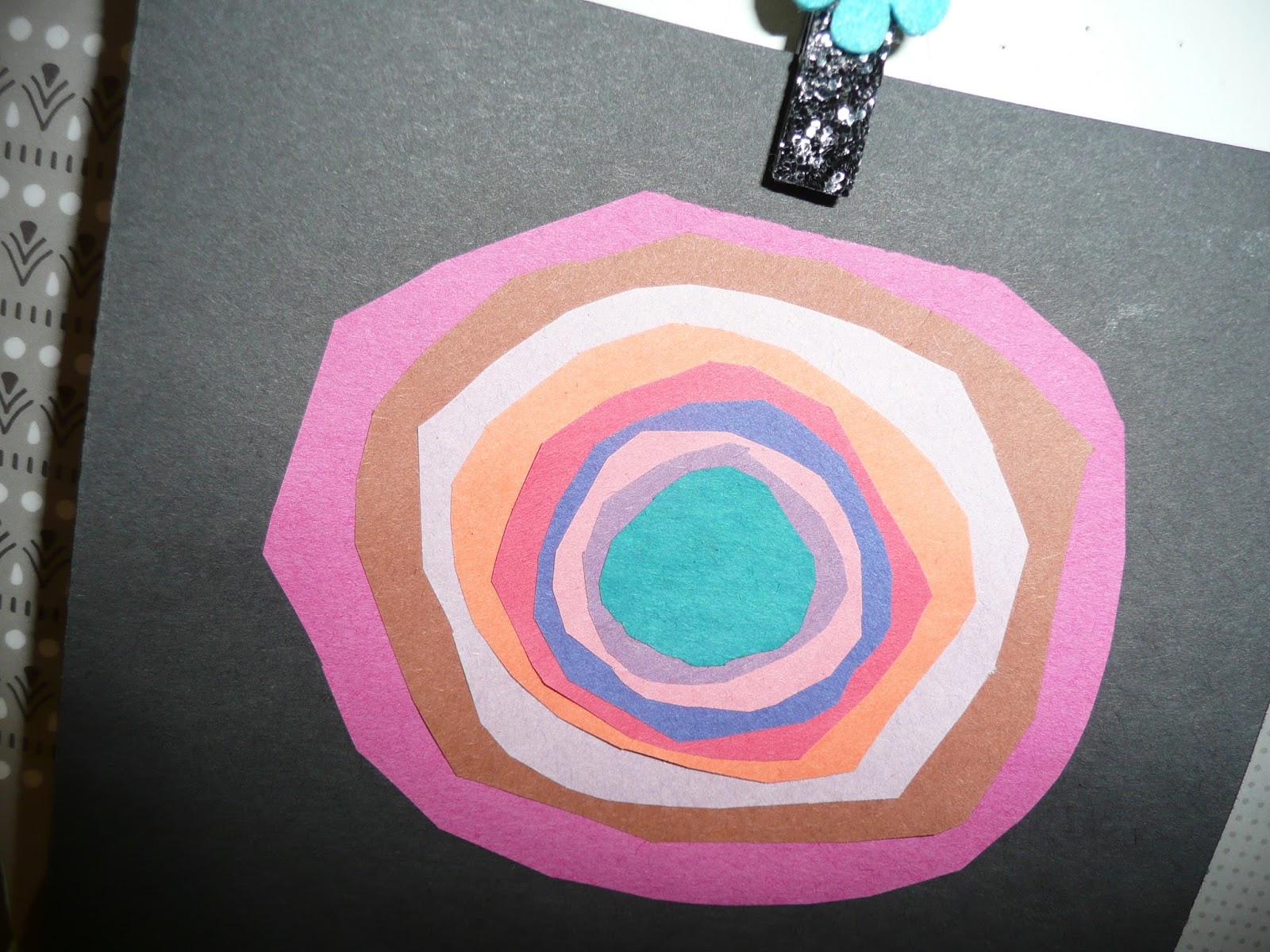
Make a mark!

Every September 15-ish, we celebrate International Dot Day.
The story has a main character named Vashti who learns to 'make a mark'
and recognize that she can do more than she thought she could.

Here's some of my students' marks!  They are artists!


Tuesday, 13 September 2016

What's with the labels??

What a day to be 'Teacher's pet'!  Our good humoured kiddo allowed us to label him!  Why would we do that?  It is part of our new learning.
Here is the anchor chart that is being displayed in our classroom right now.
If you can touch something, you are most likely looking at a noun.
It does get a bit tricky, but we tried labelling our friends, and then were reminded of something that might have been heard in Grade One...
a noun is a person, a place or a thing.  Can you touch Fort Saskatchewan?  It's a place.  We think that since we are standing in the city, then we are touching it with our feet!
We then talked about action words, which have the fancy name of verbs.
We tried to pantomime all of these lovely verbs.  The students tried to identify the actions of Pete the Cat, who is the main character of the books we are reading in class.  We are going to notice in our next lesson, that verbs can tell us when the action took place.  Here's an example:
ran     run      running

Friday, 9 September 2016

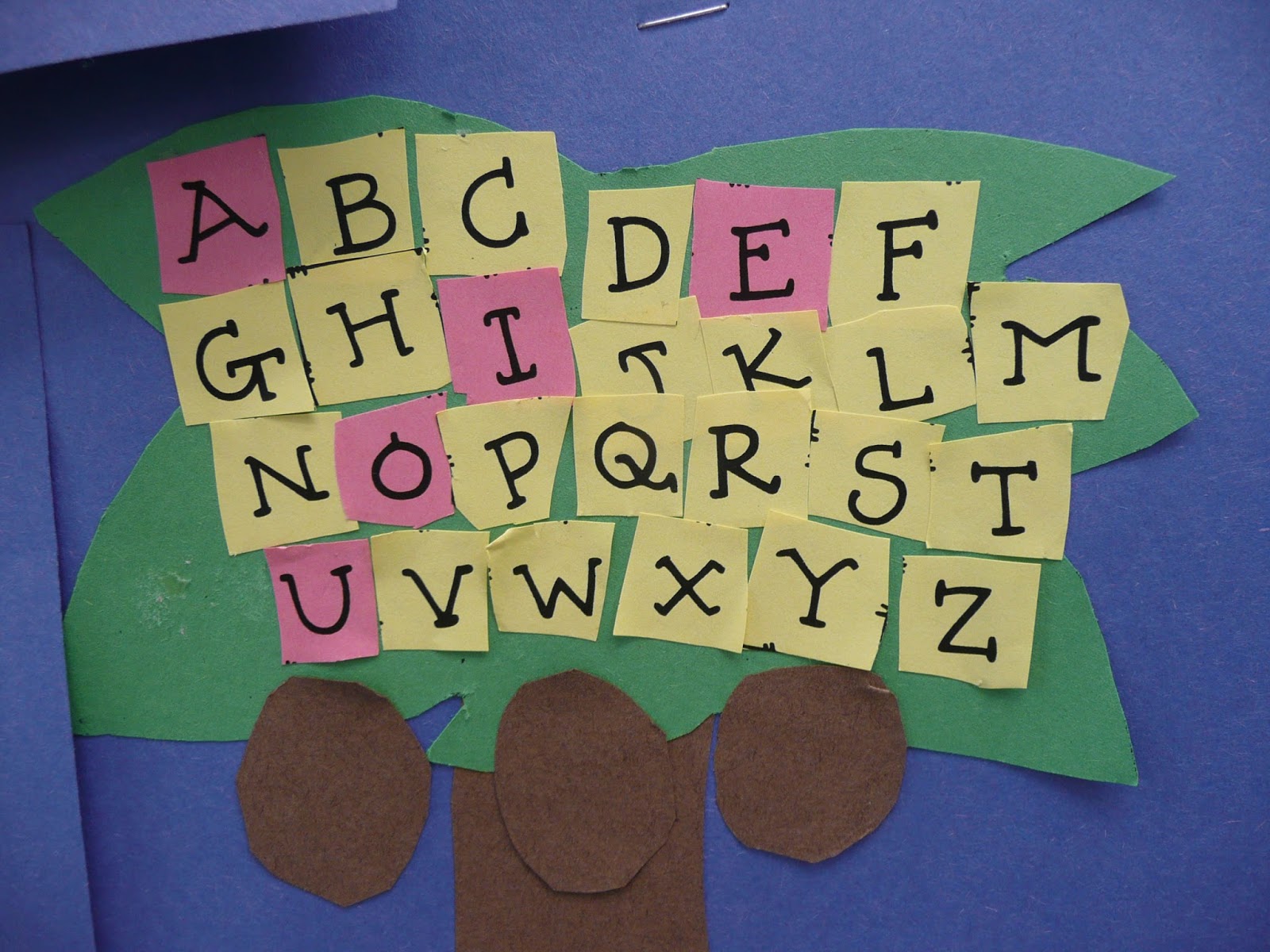
Chicka Chicka Boom Boom

Recognize this favourite?  This book led many of our classroom language learning activities this week, as the students demonstrated their understanding of the alphabet.
Look at how bright and colourful our back wall is now with their work.
The students practised cutting and pasting as they created a palm tree with three coconuts and all the alphabet "up the coconut tree."  They were to find a way to put the letters in alphabetical order.
Here's another way that a student choose to show the order of the letters.
What would you say about this student's ability to put the letters in order?
The students also took the first letter of their first letter and completed this little writing.  I put any of the words that they chose onto the white board for them to copy.  There are many students who are not sure how to correctly make each upper and lower case letter.   If you notice the errors, such as the backwards 'j' and below, the 'n' with the line on the wrong side, please demonstrate the proper way to make the letter.  We say "go down the ladder" for every letter, which means, every letter is made from the top down, not the other way around.

The students do not take their morning snack outside.  Instead for all recess breaks, the students go out to run and jump and play to get their hearts going.  When they take their snacks out, they just stand around and can't "shake their sillies out."

When they return from morning recess, they get a fruit or a vegetable from their lunch and come into the classroom.  they have about 5 minutes to eat before we start our lessons.  Look at these great choices"
cucumbers and tomatoes and dip
grapes
carrots, tomatoes and pepper slices
oranges
blueberries
more peppers and dip
and a good old fashioned apple.

The Canada Food Guide says that children aged 5 to 8 need 5 servings of fruits and vegetables a day. By sending fruits and vegetables as morning snacks, you are helping your child get the vitamins and natural sugars that they need.  If a child does not have a fruit or vegetable in their lunch, they are encouraged to ask others at their table to share with them.  

Monday, 5 September 2016

Following directions.....following rules

Whenever we work on a lesson, there is always a 'tie-in' to the Alberta Learning Program of Study.  Each grade has specific aspects of learning that the students are to be proficient in during their time at that grade level.  Even lessons that look like they're 'fun' have a connection to learning.  Here's a case in point:  My picture doesn't really show it, but the white board has 'steps' for the children to follow.  Knowing what to do first, second, etc. is important.  Listening to directions is a skill to have under your belt, but so is knowing that you might have to go back and re-read to stay on track!
The students were making their own 'David', who is the main character in a series of books written by David Shannon.  The little boy in the story is learning how to follow rules.
Another aspect of our learning involved knowing how to 'orientate' or turn the paper.  Here's an idea that I had come across.  The paper can be turned so that it is long 'like a hot dog' or tall 'like a hamburger.  Connections like these help little ones understand the directions a bit better
Here is the sort that the students helped me do with what they should and shouldn't do in school.
Each and every David turned out differently!
I think they make a lovely display just outside of our classroom!

SaveSave

Wednesday, 31 August 2016

Just down the hall from our Grade Two classroom is an alcove area that our class and another class will share.  Just like our tiny classroom, there is not very much space in this area either.  We are going to have to plan strategically for the 45 students to be able to use this area and find their items.
Here's a photo to show you that each student only has one coat hook.  Starting tomorrow, we will have a new way to organize ourselves.  First, only our outside clothing will be going on the hook.  This is in preparation for winter when we will have both snow pants and a coat that need to be hung up.  There is a wooden shelf above.  You'll notice I put the name tags up high.  Here's my plan:  The next time you finish a gallon (oops!  not metric...should that be 3.84 litres?? of ice cream, please wash and wipe thoroughly and send it into me.  I will label and it will sit above the coat hook on the wooden shelf.  In the winter, your child will use it as the place to put their hat and mittens.  Here's hoping that will help us find them a bit easier!

The little ledge area below is going to be where the students place their backpacks.  Again my hope is that they will find it easier to access and keep things easier to find.
Today each student is bringing home a plastic binder.  I'll be taking these back at the end of the year.  Here's what is inside:
These are B.E.E. binders.  It stands for "Bring Everything Everyday"
Please help your child by ensuring that this comes to school everyday.  It's our main method of organizing and communication.
Inside is a page that explains the binder (with a few spelling errors...why didn't I proof this??)
...a page to explain BRAG TAGS, the students got their first one today (Whoo hoo!)
..an explanation of why it is important to read every night (no excuses!)
and another page that offers different ways to get your child to talk about school instead of "What did you learn at school today? (we know the answer to that one is ...nothing!)

...a couple more pages about reading with your child.....
and the correct way to make printed letters....something a great number of students need to work on!!
Also inside the B.E.E. binder is the child's agenda.  This does not ever need to be removed from the binder as it easily allows for the pages to be turned when it is inside.  Every child got to choose a Canadian animal marker (you can see it sticking out above the book) which will help them find their page easily.  Sorry but I was only given one for each child.  Please take care and try to keep it safe!
Today we wrote inside for the first time.  You are invited to write to me using this agenda as well.  Please let your child know if there is a note for me to see. THANKS!!
At the back of the binder is a plastic pouch.  When there are notes that are to be sent home, this is where they will be put.  Please check and EMPTY this pocket each night.  If there are notes, order forms, money, etc. that you want me to receive, this pocket is the best place for them to be placed.  Again, please let your child know if you have sent something so that I am sure to check.  

Remember, you have one Grade 2 child to check on, but I have 25!!  
Thanks for being an involved parent!

SaveSave